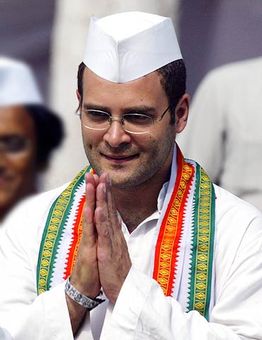
'The BJP does not offer any credible alternative to the Congress. The Congress is the lesser evil if you had to choose,' says Thomas Macaulay biographer Zareer Masani.
Congress leader and former diplomat Mani Shankar Aiyar called the Indian Foreign Service (IFS) of yore an "upper caste" service, which he claimed is becoming more democratic now with the flavour of the country getting into it.
The director of the Indian Institute of Technology (IIT) Madras, V Kamakoti, has sparked controversy after making a remark about the "medicinal value" of cow urine, or "gomutra." Kamakoti, while speaking at an event celebrating Maatu Pongal (a festival dedicated to cows and bulls), cited an anecdote about a sanyasi who was cured of a fever by consuming gomutra. He also claimed that gomutra has "anti-bacterial, anti-fungal, and digestive properties." The remark has been widely condemned by rationalist organizations, political leaders, and medical professionals who have criticized Kamakoti's statements as "pseudoscience" and "regressive." The controversy highlights the ongoing debate in India around traditional beliefs and scientific evidence.
The post mandate comments that 'darkness has descended on India' shows the kind of opposition Modi has to overcome. It is this aspirational India that is attempting to throw away shackles of Macualayism. Make no mistake it is a tectonic shift and a beginning of the end of Maculayan mindset that has 'ruled' India for close to 60 years, says Colonel (retd) Anil Athale.

We do what the boss wants us to. And we do not mind putting body and soul on the line, notes Suveen Sinha.
'It is not happening in the same manner as it was happening during the time of the Peshwas.' 'Whatever happened during the Peshwas cannot happen now.'

Debates on changing the name of India to Bharat continue to spark a crisis of identity without answering moot questions that stare us in the face. Ramesh Menon asks a few of those questions that do not have easy answers.
'The return of India to its own civilisational values can never endanger freedoms as pluralism is the bedrock of our culture,' assert Lieutenant General Ashok Joshi (retd) and Colonel Anil A Athale (retd).

'In a war of guerrilla resistance from 1682 to 1707, the Marathas destroyed the foundations of the Mughal empire.' 'Shivaji was dead, but his example and ideals survived and were the main source for inspiration for the Marathas in their desperate struggle with the mighty Mughal empire,' notes Colonel Anil A Athale (retd), the well known military historian.

While acknowledging Shivaji's naval contributions, questions are being raised about the inadequate acknowledgement of Chola sea-power in southern Tamil Nadu, which dates back by a few centuries, explains N Sathiya Moorthy.

Will Indian democracy benefit from the potential that Shashi Tharoor stores in his mind, spirit and intellect? Or will it be the saga of another leader who promised much but delivered too little, asks Dr Sudhir Bisht.

'That has always been my ambition -- to take the reader behind the scenes, to the places he was not allowed to visit, but which I had the privilege of entering.' Haresh Pandya remembers Ted Corbett, sports journalist extraordinaire, who passed into the ages on August 9.

'Your constant reiteration on the lack of religious freedom in India has sown doubts about the kind of information that you are being fed and based on which you seem to be making adverse references to India and its tradition of religious tolerance.'

Educationist Dr Shashi K Pande on how he sees India, and how he would like to see it change.
